Key points
- Start from how many guests you host and how they arrive, are served and leave.
- Perimeter seating, clear circulation and a visible focal point define a workable layout.
- Soft surfaces and ceiling treatment control the noise of a full room.
- Service storage and a route to the kitchen keep hosting calm.
This guide is for villa owners in Dubai and across the UAE who want a majlis that feels contemporary but still works as a place of hospitality. It is about function first: how guests are received, seated, served and seen off, and how the room supports conversation for a few people or for a full evening. Customs and preferences differ between families, so treat the points below as a framework to adapt to your own household.
Begin with how you host
Before choosing a sofa, write down what happens in the room.
- Number of guests: a typical evening and the largest gathering you expect.
- Arrival: whether guests enter through a separate door, a porch or the main hall, and whether they should pass through private areas.
- Service: who serves coffee, tea, dates and food, and from where.
- Duration: a short visit, a long evening, or overnight guests.
- Occasions: seasonal or family gatherings that change the numbers and the atmosphere.
The answers decide the size and position of the room. A majlis that needs its own entrance, guest cloakroom and quick access to a serving area is best planned at the start of the project, as described in planning a villa interior in Dubai, rather than fitted into leftover space.
Layout for conversation and circulation
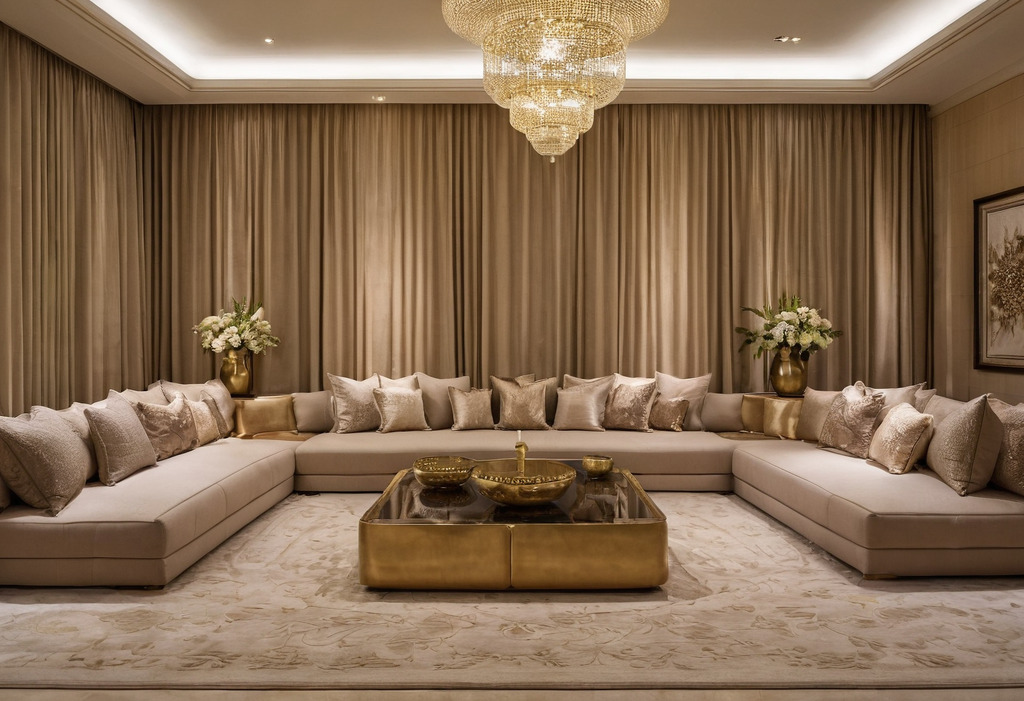
The traditional majlis arrangement, seating along the walls around an open centre, remains a reliable starting point because it lets everyone see each other and leaves room for service. A contemporary version can soften it without abandoning the principle.
Seating arrangements
- Perimeter sofas or floor-level seating maximise capacity and keep the centre open.
- Sectional arrangements offer flexibility, because modules can be moved to suit the number of guests.
- Clusters of armchairs create smaller conversation groups in a large room but reduce the maximum capacity.
Seat depth and height often matter more than style. Guests may sit for hours, so the back support and the height of the cushion affect how long they remain comfortable. Test a piece in person where possible. The practicalities of ordering, measuring and delivering large upholstery are in buying Italian furniture in Dubai.
Circulation
Leave clear paths for guests entering and for those serving. A side table within reach of each seat avoids people reaching across others. Place the main door so that arriving guests are not immediately facing the most senior seat head-on unless that is your intention; think through who sits where and who greets whom.
Seating and tables
Low tables serve hot drinks and dishes, so choose stable tops with durable finishes that tolerate heat and spills. Small tables that nest or move easily help service. Avoid very delicate tables in the main flow of traffic.
Consider the following for each seating area:
- A side table or shelf for a cup within reach.
- A surface that can take a hot pot without marking.
- Space for a tray to pass between seats and tables.
- Room for shoes, if your household removes them, near the entrance rather than among the seating.
Fabric and upholstery should be robust and easy to clean. Guests spill, children climb, and strong sun from large windows can fade what sits near them. Materials for the Gulf climate covers fabric and finish questions in more detail.
Acoustics
A full majlis can be loud. Hard floors, stone walls and glazing reflect voices, and a high ceiling adds echo. Conversation then becomes tiring, which can shorten the evening.
Ways to manage sound without making the room feel heavy:
- Rugs or carpet over part of the floor, chosen for durability and cleaning.
- Upholstered seating and thick curtains, which absorb more sound than you might expect.
- Acoustic panels disguised as fabric-wrapped wall panels, slatted timber with absorbent backing or a perforated ceiling finish.
- A ceiling treatment such as a coffered or absorbent ceiling in a tall room.
- Distance from the kitchen and dining room so that service noise does not intrude.
Ask your designer or an acoustic consultant for guidance in a large room. Materials that look alike can absorb sound very differently, so ask for technical data rather than a verbal assurance.
Lighting
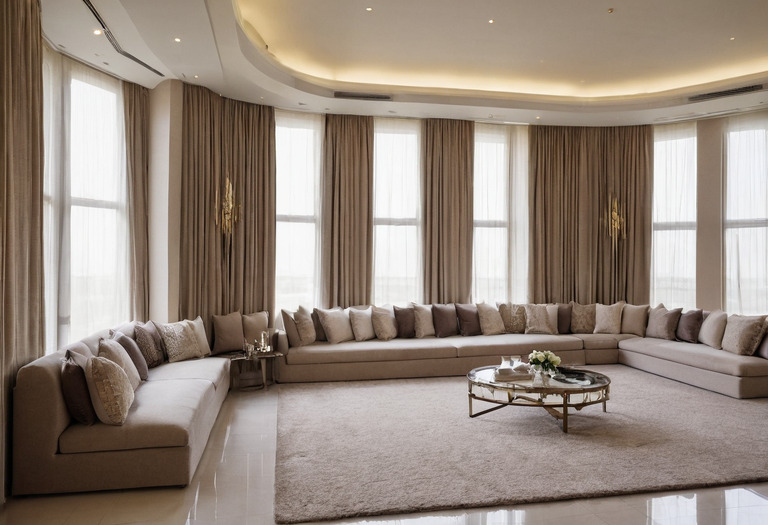
A majlis is used by day and by night, often at very different light levels. Layered lighting lets the room change character: bright enough for greeting and serving, softer for a long conversation.
- Use general light from concealed or ceiling sources for arrival and cleaning.
- Add table or wall lamps near seating for warmth at eye level.
- Highlight art, niches or a feature wall with accent lighting.
- Use dimmers and preset scenes so the host does not need to manage several switches.
- Control glare from windows with sheers and blackout layers.
These layers are explained in lighting a Dubai home. Choose colour temperature with care, since cold white light can feel less welcoming in the evening and can change how fabrics and skin tones appear.
Storage and serving
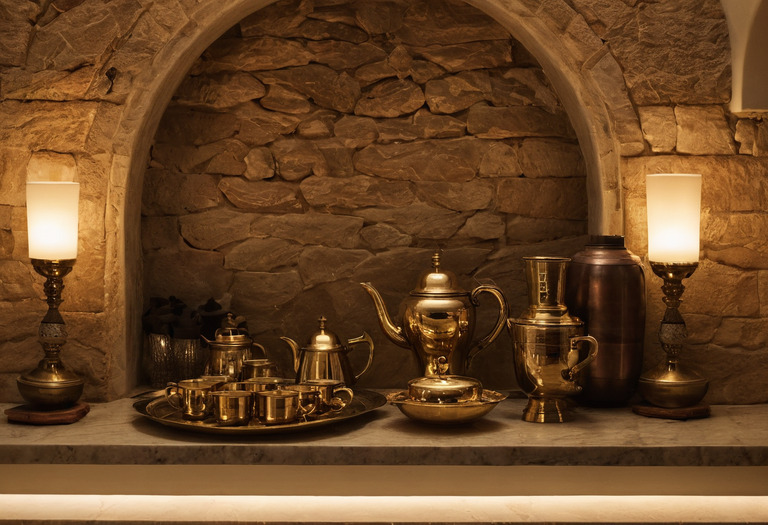
Hospitality needs supplies close at hand. Plan concealed storage before choosing decorative pieces.
- Cupboards or a sideboard for cups, glasses, trays, incense burners and dallah-style coffee pots.
- A discreet serving counter or buffet, with a power socket for warmers or kettles if required.
- Space for extra cushions, throws or additional seating.
- Shoe storage near the door if needed.
- A route for service staff that avoids crossing the guest area, leading directly to the kitchen. Kitchen planning in kitchen design for Dubai villas explains how to separate service routes from family movement.
Materials and finish
Contemporary majlis design often pairs calm, neutral backgrounds with texture: timber panelling, stone, plaster, textile wall finishes and patterned or metallic detail. Keep one or two materials dominant and use others sparingly, so the room feels composed.
Choose floor finishes for foot traffic and cleaning, walls for durability near seating, and ceilings that support lighting and sound control. Metal or lacquered details can look refined but show marks, so consider the level of handling they will receive.
Relation to dining
Many households host a meal after receiving guests in the majlis, so the route between the two rooms is important. Keep the path direct, wide enough for food to be carried, and out of sight of private spaces. If the dining room adjoins the majlis, consider sliding or pivot doors so the two spaces can be combined for large events and separated for smaller ones. Match materials and lighting so the transition feels intentional, and give the dining room's acoustics the same care as the majlis's.
Next steps
Sketch the guest journey from arrival to departure and mark where each item of service is stored. Then read lighting a Dubai home to set the layers and controls that will let the room change from greeting space to evening room.