Key points
- Every material faces several stresses at once: UV, heat, humidity outdoors and dry cooled air inside.
- Natural stone and timber need sealing, movement allowance and sensible placement.
- Fabric choice depends on sun exposure and cleaning needs, not only on colour.
- Outdoor furniture should be specified for outdoor use, with metals and finishes suited to coastal air.
This guide is for villa and apartment owners in Dubai and elsewhere on the Gulf coast who are choosing finishes and want them to look good after several summers, not only on handover day. It describes the stresses the climate places on interiors and gives practical questions for stone, timber, fabric, metal and outdoor furniture. It cannot replace a supplier's technical data, but it will help you ask for the right information.
The stresses to plan for
A Gulf interior is an unusual environment because the extremes sit close together.
- Heat and UV: strong sunlight through glass fades dyes, dries leather, warms dark surfaces and ages finishes and adhesives.
- Coastal humidity and salt: near the sea, the air outdoors and on terraces carries moisture and salt that attacks some metals and finishes.
- Air conditioning: indoors the air is cooled and dried, and temperature differs sharply from the outdoors every time a door opens. Timber and glued joints feel this.
- Sand and dust: fine dust settles on everything, scratches polished surfaces and clogs textured ones.
- Sudden moisture: occasional rain, condensation on cold glass and wet areas such as bathrooms and kitchens.
Ask each supplier how the product behaves under the conditions that apply to its position in your home: a sofa by a west-facing window is in a different place from a console in a shaded hall.
Stone
Stone is a natural choice for floors and worktops in hot climates because it feels cool and is durable, but it is not one material. Marble, limestone, travertine, granite and engineered stone behave differently.
What to ask:
- Is the stone porous, and does it need sealing before and during use? How often is resealing advised?
- How does it react to acids, oils and cleaning products?
- For polished surfaces, how visible are scratches and sand abrasion in daily use?
- For floors, is it slip-resistant enough for wet areas and terraces, and is the finish suitable for bare feet?
- Has a sample from the actual batch been approved? Natural stone varies in vein and colour, so review several slabs or tiles, not one.
Large stone floors should be laid with correct movement joints and a sound substrate. Ask the contractor how this is handled, particularly at thresholds to terraces and across big open areas.
Timber and veneers
Timber responds to humidity. In an air-conditioned Dubai home it can dry and move, particularly if it was not properly conditioned before installation.
- Solid timber is beautiful but more prone to movement. Ask about moisture content at installation and how the joinery allows for expansion and contraction.
- Veneers on stable boards are common in cabinetry because the substrate is more dimensionally stable. This is a sound technique, not a compromise, when well made.
- Engineered flooring can cope better than solid boards, but quality varies with the layers and adhesive used.
- Finishes: lacquers and oils have different resilience to sun. Test a sample in the window light where it will sit.
Keep timber away from air-conditioning outlets and direct midday sun where possible, and run air conditioning consistently during construction and after handover, because abrupt changes are harder on timber than steady conditions.
Fabrics and leather
Fading is a frequent failure in sunny rooms, along with fraying and stains.
- Ask for the light-fastness rating and cleaning code of each upholstery and curtain fabric, and note that curtains on bright façades need it most.
- Natural fibres such as linen and cotton are breathable and comfortable in warm rooms, but they crease, stain more readily and may fade. Synthetic or blended performance fabrics resist sun and stains better.
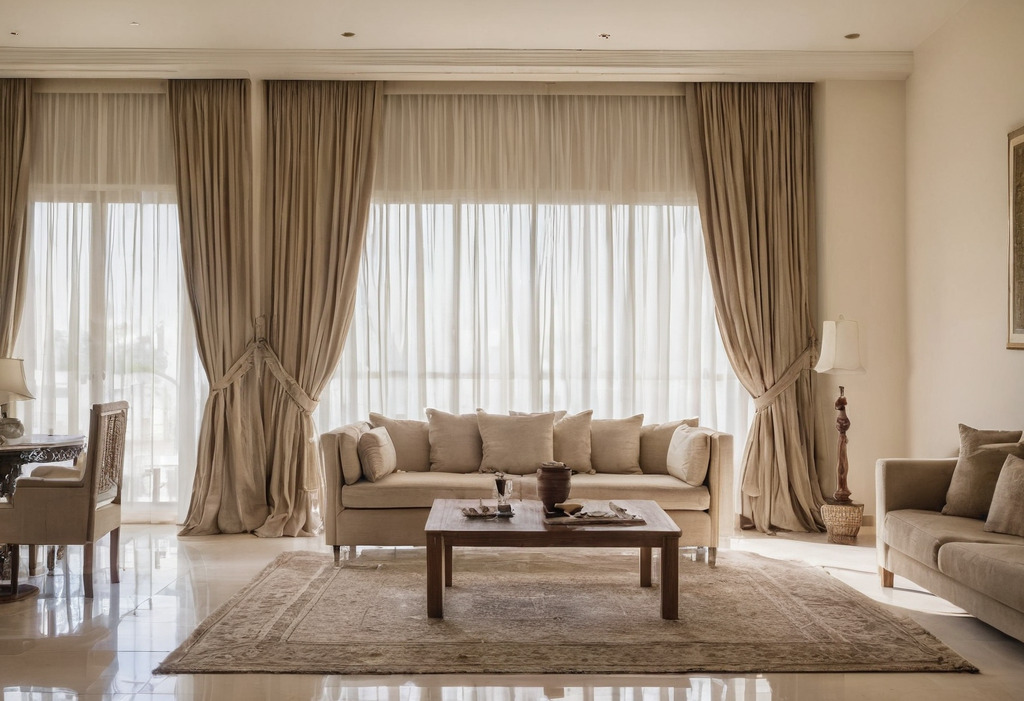
- Sheer curtains and a lined layer together let you control light and protect furniture. The lighting side of this is discussed in lighting a Dubai home.
- Leather should be kept from direct sun and cold air streams. Ask whether the finish is protected and how to maintain it.
- Dark colours absorb heat and show dust; very pale colours show marks. Test the real sample in the real room.
Many of these questions come up again when you buy ordered furniture, so they return in buying Italian furniture in Dubai.
Metals and hardware
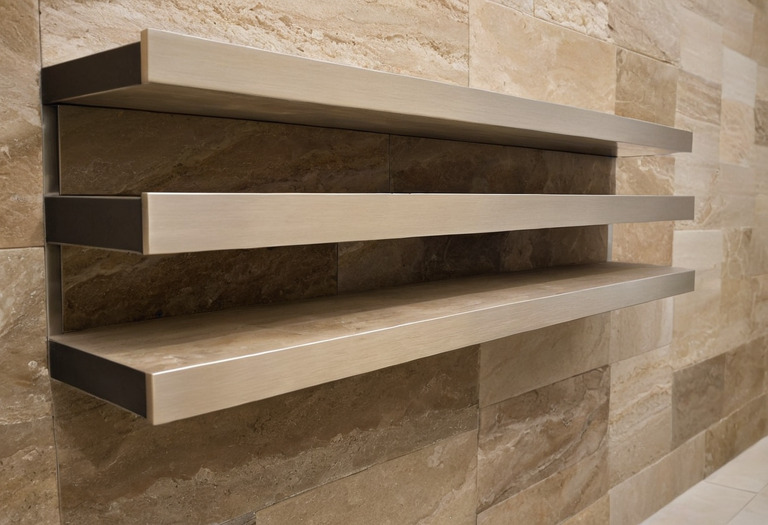
Metal finishes differ in how they cope with moisture, handling and salt.
- Stainless steel grades vary; ask which grade is used where salt air is present.
- Brass and bronze develop a patina unless lacquered, and lacquer can wear unevenly on door handles.
- Plated and coated finishes should be checked for thickness and durability, especially on taps, door handles and lighting.
- Aluminium is light and fairly resistant to corrosion, and a powder coat adds protection, but the coating's quality matters.
Bathrooms and kitchens deserve particular attention, because water, steam and cleaning products all act on hardware. Ask for warranty terms in writing, and check what cleaning products are permitted.
Outdoor furniture and terraces
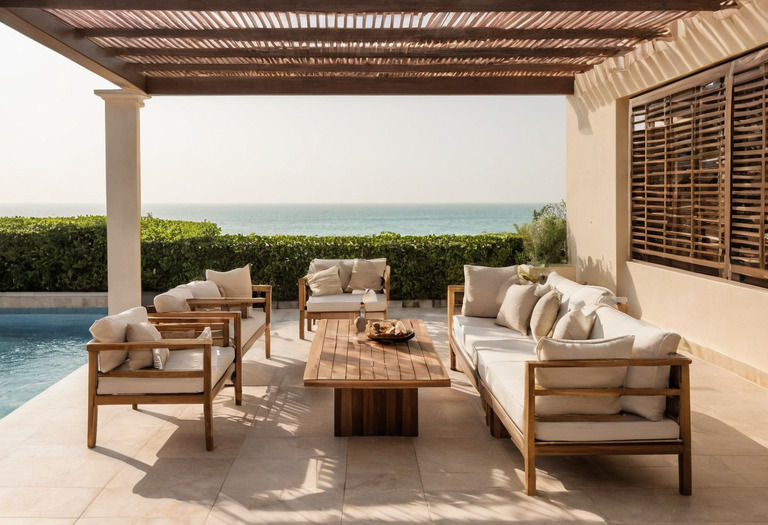
Outdoor pieces face the harshest conditions in the house. Specify furniture made for outdoor use, not indoor pieces moved to the terrace.
Checklist:
- Frame: powder-coated aluminium, corrosion-resistant steel or suitable hardwood, matched to whether you are near the sea.
- Fabric: solution-dyed or outdoor-rated, quick-drying, resistant to UV and mildew.
- Cushion filling: open-cell foam that drains, not sponge that holds water.
- Fixings: stainless or coated, not plain steel.
- Surfaces: consider how hot a top or seat becomes in summer sun, and whether the finish is comfortable to touch.
Shade structures, sun-screening and planting protect both furniture and users. Cover or store cushions when a terrace is not in use, and rinse dust and salt off frames periodically.
Maintenance habits that matter
Maintenance is usually cheaper than replacement, and most of it is habit rather than expense. Even well-chosen materials need routine care. Wipe dust before it becomes abrasive, use the cleaners recommended by the maker, reseal stone as advised, and close curtains during the brightest hours where fabrics are sensitive. Keep a folder with finish codes and care sheets, so that anyone who later repairs or extends the room can match what is already there, rather than guessing from a photograph. Note the room each material sits in and the date it was installed. When you commission a whole interior, the route from samples to handover in planning a villa interior in Dubai shows where to collect this information.
Next steps
List the rooms that receive the most sun, the areas near the coast or outdoors, and the spaces that are heavily used. Match each to the questions above and ask suppliers for written technical data. Then read lighting a Dubai home to see how light and daylight control protect the materials you have chosen.