Key points
- Combine ambient, task and accent light rather than relying on a single ceiling source.
- Plan lighting with the ceiling and furniture layout, before electrical work starts.
- Control daylight and heat from windows as carefully as artificial light.
- Choose colour temperature by room and keep it consistent across connected spaces.
This guide is for owners of Dubai villas and apartments who are planning new lighting or unhappy with the light they have: rooms that feel flat, glare on the television, harsh white bulbs, or a control panel nobody understands. It explains the main layers of light, how daylight changes the picture in a bright climate, and what to settle before electricians begin.
Think in layers
A single ceiling fitting lights a room evenly and badly. Good lighting uses several sources, each with a job.
Ambient light
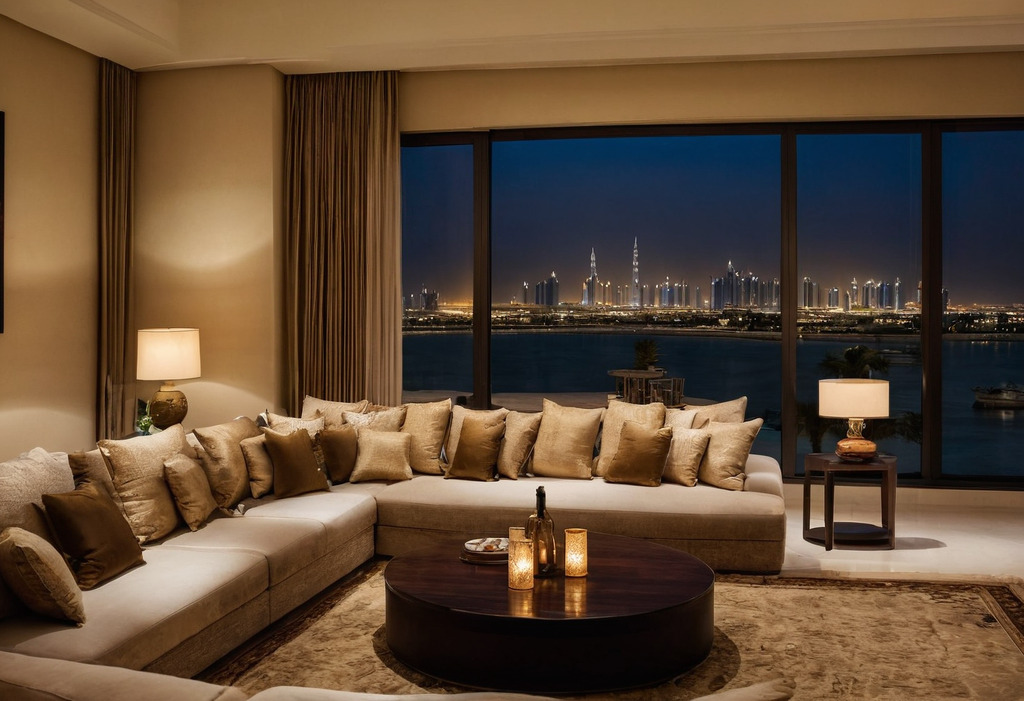
This is the general level that lets you move safely and see the room. It can come from recessed fittings, cove lighting, pendants or wall lights. Aim for softness rather than brightness: ambient light that is too strong flattens surfaces and makes a room feel like an office.
Task light
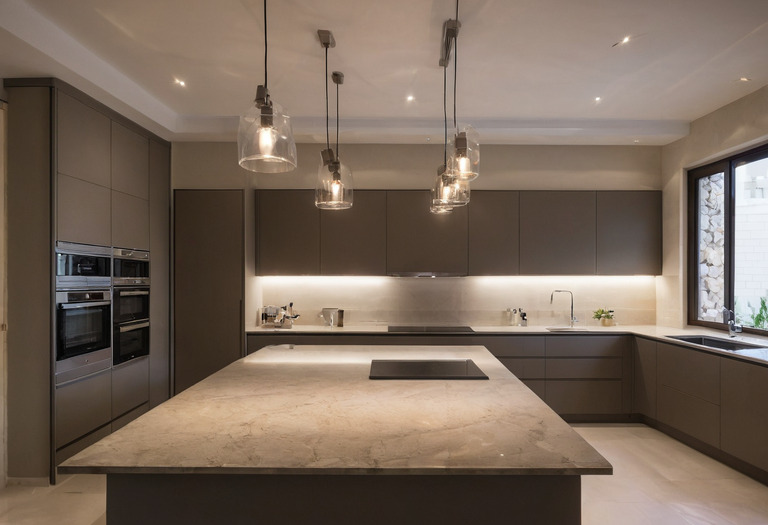
Task light supports specific activities: reading, cooking, applying make-up, working at a desk. It should be placed where the work happens and directed so that the user does not cast a shadow over the task. Under-cabinet lighting in the kitchen and a reading lamp by a sofa or bed are typical examples.
Accent light
Accent light adds depth by highlighting art, textured walls, joinery niches, plants or architectural features. It should be noticeably more focused than ambient light, and adjustable so it can be refined once furniture and art are installed.
Decorative light
Chandeliers, pendants and lamps are visible objects as well as light sources. Treat them as furniture: check their size, ceiling height and the glare they produce when lit. A dramatic fitting still needs a supporting ambient layer.
Plan with the ceiling and the furniture
Lighting drawings should be made alongside the furniture plan, not after it. A recessed downlight placed before the layout is fixed can end up above a sofa back instead of a table. Put the furniture on the plan first, then position lights to serve it.
The ceiling is crowded. Air-conditioning grilles, sprinklers, speakers, curtain tracks and access panels all compete with light fittings. Ask for a coordinated ceiling plan that shows every element together. This is one of the drawings to check in the design stage described in planning a villa interior in Dubai.
Also plan wall-level and low-level light: bedside lights, corridor night lights, stair lights and cabinet interiors. Light at lower heights is often more comfortable than light from above.
Control daylight and heat
Dubai rooms can be flooded with bright light and solar heat, so daylight control is part of the lighting design.
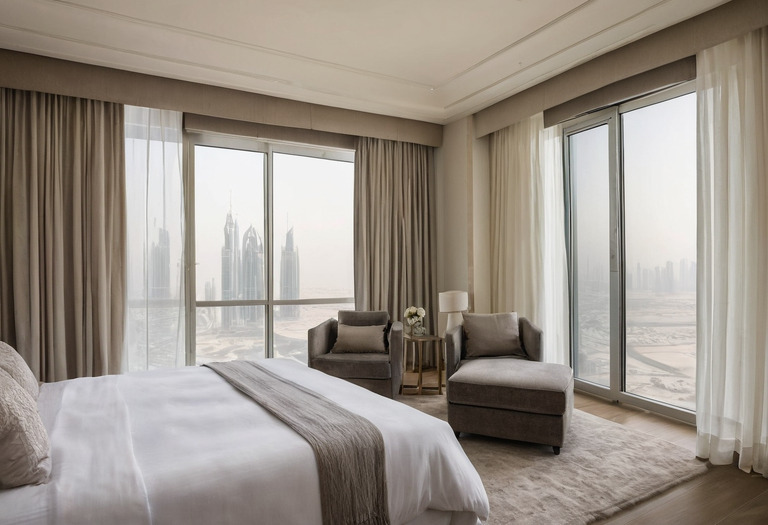
- Layered window treatment: sheer curtains soften light and reduce glare while keeping a view, and a second layer of lined or blackout curtains darkens bedrooms and media rooms.
- Shading: external shading such as louvres, deep overhangs or screens cuts heat before it enters the room.
- Glazing: ask about glass specifications and films, which affect heat, glare and colour of the incoming light.
- Motorised blinds: useful for tall or wide windows and for integration into scenes.
Sunlight can fade fabrics, timber and art, so daylight protection also helps the materials discussed in materials for the Gulf climate. Place screens, televisions and glossy art away from direct reflections, and view them at different hours before settling positions.
Colour temperature and quality of light
Colour temperature describes whether light looks warm (yellowish) or cool (bluish). Many homes feel best with warm to neutral white in living and sleeping spaces, and slightly cooler, clearer light in work areas, kitchens and dressing rooms where accurate colour matters. There is no universal correct value; the point is to be deliberate.
Practical points:
- Use the same colour temperature throughout a connected space, so light sources do not clash.
- Choose fittings with good colour rendering, particularly near kitchens, mirrors, art and fabrics. Ask suppliers for the rendering value and request a sample lit in the room.
- Consider tunable white fittings in rooms used at many times of day, so the light can shift from cooler mornings to warmer evenings.
- Dimmable fittings must be matched with compatible dimmers or drivers; flicker or buzzing usually comes from mismatched components.
Control glare
Glare is bright light that causes discomfort or hides detail. It arises from bare bright sources, reflections and strong contrasts.
- Recess downlights deeply or choose fittings with shielding so the bright source is not visible from normal seating positions.
- Avoid placing spotlights where they will reflect in glass, polished stone or television screens.
- Keep brightness contrast moderate. A very bright window behind a dark room makes the room feel darker; balance it with light on surrounding surfaces.
- Use wall washing, cove or indirect light for soft general illumination.
- Place pendants and chandeliers at a height that avoids direct view of the source while seated.
Controls that people will actually use
Even the best design fails if nobody understands the switches. Decide how the house should be operated, then select a system to match.
- Scenes: set presets such as arrival, dining, evening, cleaning and night. One touch should change several circuits.
- Dimming: dim the main living areas, bedrooms and dining rooms at least. Fixed brightness limits mood.
- Keypads and apps: wall keypads should be labelled in plain language. Apps are convenient but should not be the only way to control light, since guests and staff need simple switches.
- Sensors: motion sensors suit bathrooms, cupboards and hallways at night, but can be irritating in living rooms.
- Integration: ask whether the lighting control can be linked with curtains, blinds and air conditioning, and who supports the system after handover.
Ask for a written list of scenes and a wiring schedule, and keep a copy. A future electrician or designer is likely to need it.
Room notes
- Living and majlis spaces: layered light with dimming and accent on walls and art. See modern majlis design for how these ideas apply in a hosting room.
- Dining rooms: a dimmable focal light over the table with ambient support, so faces are lit softly.
- Kitchens: bright, clear task light over worktops and softer light for evening.
- Bedrooms: warm ambient light, reading lights at each side of the bed, and low-level night lighting.
- Bathrooms: even light at mirror level from the sides, and suitable protection ratings for wet areas.
- Outdoor spaces: low, shielded lighting that avoids glare and attracts few insects, and fittings rated for outdoor use.
Next steps
Mark on your furniture plan where people read, cook, work, eat and relax, and ask your designer to show each layer for each room. Then return to planning a villa interior in Dubai to place the lighting drawings and samples within the wider design programme.